Why Great Companies Stay Invisible
Many great companies deliver exceptional work but still struggle to be recognized, trusted, and chosen. Here’s why visibility alone is not enough.
There is a frustrating reality many business leaders experience but rarely say out loud.
They know their organization delivers exceptional work.
They know their people are talented.
They know their clients are satisfied.
Yet somehow, competitors with similar capabilities, and sometimes fewer capabilities, seem to receive more attention, more referrals, and more opportunities.
It feels unfair.
And often, it is misunderstood.
Because most businesses do not have a quality problem.
They have a recognition problem.
The Short Answer
Many great companies are not invisible because they lack expertise.
They're invisible because the market struggles to understand, remember, and explain the value they provide.
Visibility gets attention.
Recognition gets chosen.
A business can be seen often and still not be remembered clearly. Recognition happens when people understand what you do, associate you with a specific kind of value, and trust you before the first conversation ever takes place.
That does not happen by accident.
It happens through positioning, consistency, visibility, proof, and authority-building over time.
Strong Operations Do Not Automatically Create Strong Brands
One of the biggest misconceptions in business is that great work naturally leads to recognition.
It does not.
Execution matters. Quality matters. Client service matters.
But execution alone does not determine who gets remembered, trusted, referred, or chosen.
The market rarely rewards businesses simply because they deserve it.
People make decisions based on what they understand, what they remember, and what they feel confident recommending to others.
That matters especially in high-trust industries.
Law firms, title companies, mortgage servicing partners, financial institutions, consultants, and professional service providers often build strong operations long before they build strong external perception.
They are focused on the work.
Serving clients.
Meeting deadlines.
Managing risk.
Solving problems.
Delivering results.
All of that matters.
But if the market cannot clearly see and understand that value, the business may still remain under-recognized.
Being good at what you do is no longer enough.
Visibility and Recognition Are Not the Same Thing
Many organizations assume they need more visibility.
More posts.
More impressions.
More ads.
More activity.
More content.
Sometimes that is true.
But visibility and recognition are not the same thing.
Visibility means people have seen you.
Recognition means people understand what you do, remember what you stand for, and associate you with value in a specific area.
That difference matters.
A firm can post consistently and still lack recognition.
A company can attend every conference and still be hard to explain.
A business can have a beautiful website and still fail to communicate why it is the right choice.
Visibility creates exposure.
Recognition creates trust.
And trust is what moves people closer to a conversation.

Why High-Trust Businesses Struggle With Recognition
High-trust businesses often struggle with recognition for a few common reasons.
1. Their expertise is too broad to be memorable.
Many firms try to communicate everything they do at once.
Every service.
Every audience.
Every capability.
Every credential.
The result is technically accurate but strategically forgettable.
When everything is emphasized, nothing is remembered.
2. Their website explains services but not value.
A website should not simply list what a business offers.
It should help the right buyer understand:
Who this is for.
What problem is being solved.
Why this business is credible.
What makes the approach different.
What action to take next.
A website is not a brochure.
It is a trust-building tool.
3. Their content is visible but disconnected.
Posting more does not automatically build authority.
If content is inconsistent, visually scattered, or disconnected from a larger positioning strategy, it may generate activity without building recognition.
Recognition requires repetition with intention.
The market needs to hear the same core message enough times, in enough ways, to begin associating the business with a specific kind of value.
4. Their internal capabilities have outgrown their external brand.
This is one of the most common patterns we see.
A company grows.
The team matures.
The service offering becomes more sophisticated.
The client base improves.
The business becomes more valuable.
But externally, the brand still reflects an earlier stage of the company.
That gap creates friction.
The business may be operating at a high level, but the market is still perceiving it through an outdated lens.
Signs Your Business Has a Recognition Problem
You may have a recognition problem if:
- Prospects frequently ask questions your website should already answer.
- Referral partners know your name but struggle to explain what makes you different.
- Competitors with similar capabilities appear more visible or more established.
- Your expertise is stronger than your market reputation.
- Your website, LinkedIn presence, sales materials, and visual identity feel disconnected.
- New opportunities depend almost entirely on existing relationships.
- You find yourself explaining the same things during early conversations.
- Your team understands the value you provide, but the market does not seem to understand it yet.
Recognition gaps rarely appear overnight.
They compound gradually.
At first, the gap may feel small.
Over time, it can affect referrals, pricing confidence, sales conversations, recruiting, partnership opportunities, and long-term growth.
What This Looks Like in Practice
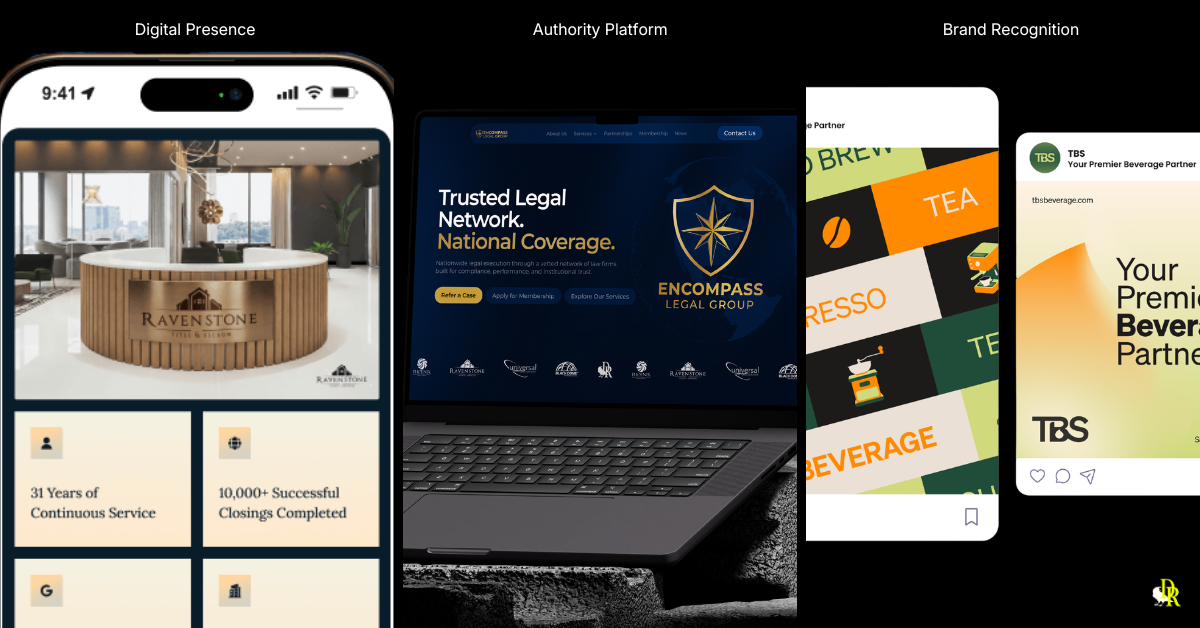
A title and escrow company may have decades of experience, but if its website does not clearly separate service lines, buyers may struggle to understand where to go or who the company is best positioned to serve.
A legal services organization may have a strong national model, but without clear positioning, messaging, and visual consistency, the market may not immediately understand the scale or purpose of what has been built.
A law firm may publish important legal updates, but if every post feels disconnected, the firm may become visible without becoming recognizable.
A professional services business may deliver exceptional outcomes, but if its brand identity, website, and content do not reflect that level of expertise, buyers may underestimate the company before a conversation ever happens.
That is the real issue.
Many businesses are not lacking capability.
They are lacking a clear and consistent external signal of that capability.
How Recognition Compounds
Recognition is rarely built through one campaign.
It is built through repeated, consistent touchpoints over time.
Every website visit.
Every LinkedIn post.
Every proposal.
Every case study.
Every referral conversation.
Every conference introduction.
Every visual asset.
Every client experience.
Each interaction either strengthens or weakens the market’s understanding of who you are and what you stand for.
When those touchpoints are aligned, recognition compounds.
When they are scattered, the market has to work harder to understand you.
And most buyers will not work that hard.
Five Ways High-Trust Businesses Build Recognition
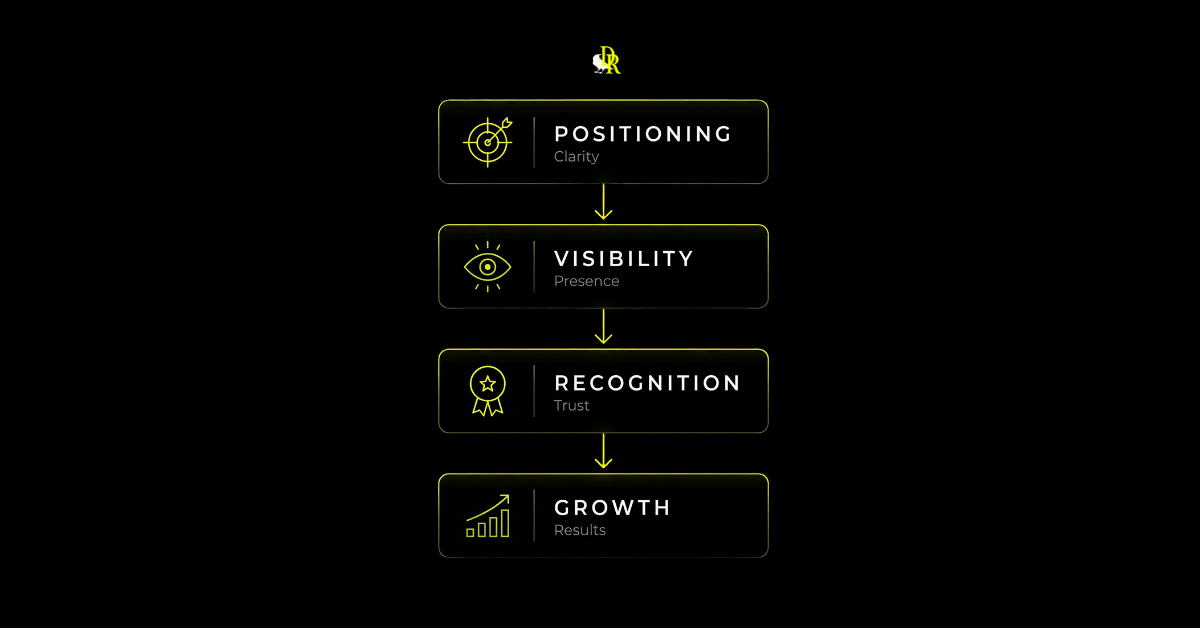
The businesses that become recognized, trusted, and chosen usually strengthen five areas.
1. Clear Positioning
People cannot remember what they do not understand.
Clear positioning defines who you serve, what problem you solve, why it matters, and what makes your business different.
This does not mean becoming narrow for the sake of being narrow.
It means becoming clear enough to be remembered.
2. Consistent Brand Identity
Visual consistency builds familiarity.
Familiarity builds trust.
A strong brand system creates continuity across your website, LinkedIn presence, presentations, proposals, conference materials, social graphics, case studies, and internal assets.
This is not about making things look pretty.
It is about helping every touchpoint feel connected.
3. A Website That Builds Trust
Your website is often where buyers validate what they have already heard about you.
It should help them quickly understand:
What you do.
Who you serve.
Why you are credible.
What makes your approach different.
What proof exists.
How to take the next step.
If your website only provides information, it is underperforming.
It should build confidence.
4. Thought Leadership With a Point of View
Thought leadership is not posting for the sake of posting.
It is not repeating what everyone else already says.
Strong thought leadership helps the market understand how you think.
It should reveal your judgment, experience, pattern recognition, and perspective.
That is what makes people trust you before they speak with you.
5. Proof
Recognition becomes stronger when it is supported by proof.
Case studies.
Client outcomes.
Project examples.
Industry experience.
Testimonials.
Visual transformations.
Conference participation.
Leadership visibility.
Proof gives the market something concrete to believe.
Without proof, positioning can sound like a claim.
With proof, it becomes credible.
The Recognition Gap
At Draper Designs, we often think about this challenge through a simple lens:
Recognition vs. visibility.
Most businesses do not need more noise.
They need more clarity.
More consistency.
More authority.
More opportunities for the market to connect their expertise with a clear identity.
Because people do not always choose the best option.
They choose the option they recognize, trust, and remember.
That is why authority is built before the first call.
Long before a proposal.
Long before a meeting.
Long before someone reaches out.
The strongest brands are often recognized before they are introduced.
And that recognition rarely happens by accident.
Key Takeaways
- Visibility and recognition are not the same thing.
- Great work alone does not create strong brands.
- High-trust businesses often outgrow their external perception.
- Recognition compounds through repeated touchpoints.
- Strong brands are recognized before they are introduced.
Final Thoughts
Many great companies remain invisible not because they lack expertise.
They remain invisible because the market has not yet learned to recognize the value they already provide.
Closing that gap changes everything.
It changes how people understand you, remember you, refer you, trust you, and ultimately how often they choose you.
Visibility gets attention.
Recognition gets chosen.
Ready to Be Recognized Before You’re Introduced?
